

إقامة
A home screen that remembers the prayer
Aqeem turns your TV into a calm Islamic home screen. Most of the day it shows art, the Ayah of the Day and the Hijri calendar. When a prayer is near, it shows the prayer, and at its time it plays the adhan.
Prayer-aware
The screen turns to the prayer when it matters
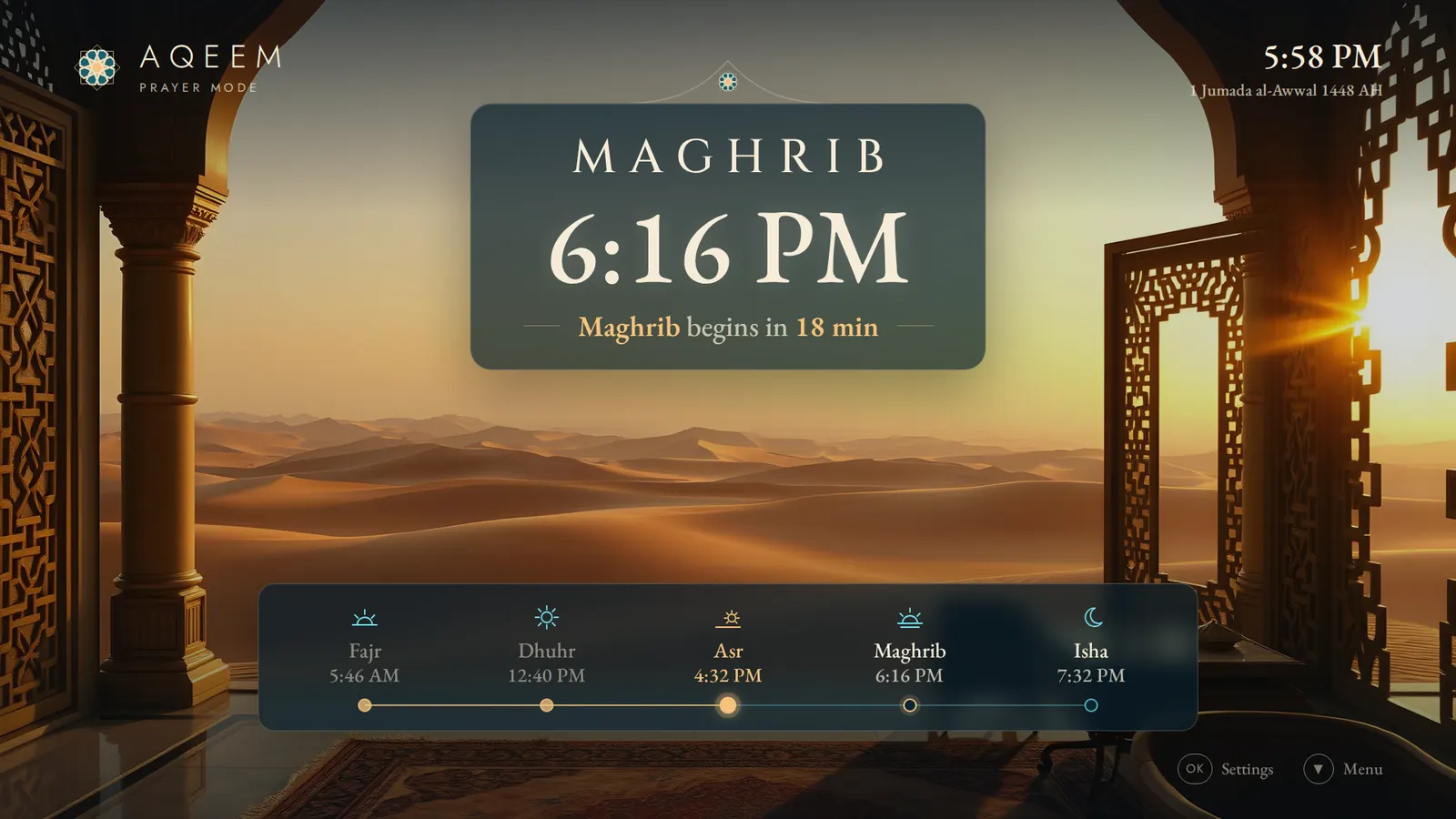
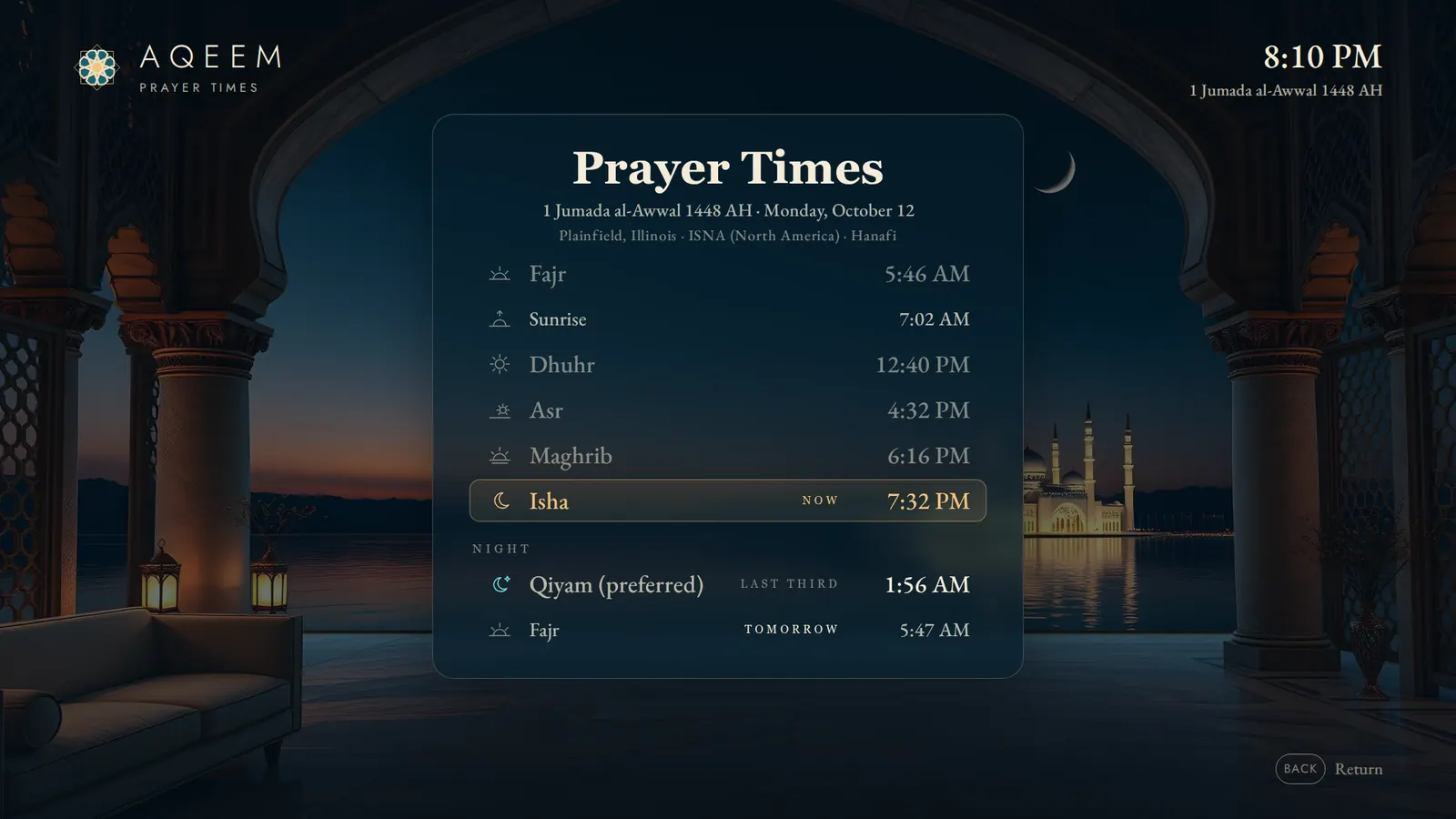
Thirty minutes before each prayer, the screen focuses on it. When the time comes, the adhan plays, and the prayer stays on screen while its time is fresh.
- The countdown always names the prayer: “Maghrib begins in 18 min”.
- On Samsung TVs, Aqeem pauses what's playing for the adhan and resumes it afterwards.
- Each adhan can play at the prayer's start or a set number of minutes after it, or be switched off.
- The last third of the night is marked as Qiyam (preferred), without ever replacing Isha.
What it does
Ambient first, prayer-aware second
Between prayers, Aqeem is something beautiful to have on the wall. Around prayer time, it's the most useful screen in the house.
Accurate prayer times
Calculated on the TV for your city, with ISNA, Muslim World League, Umm al-Qura, Egyptian or Karachi, your Asr school, and per-prayer adjustments.
The adhan, on time
A separate recording for Fajr, an adhan volume set as a share of the TV's (Aqeem never changes the TV volume itself), and a test button so you know it works.
Ayah of the Day
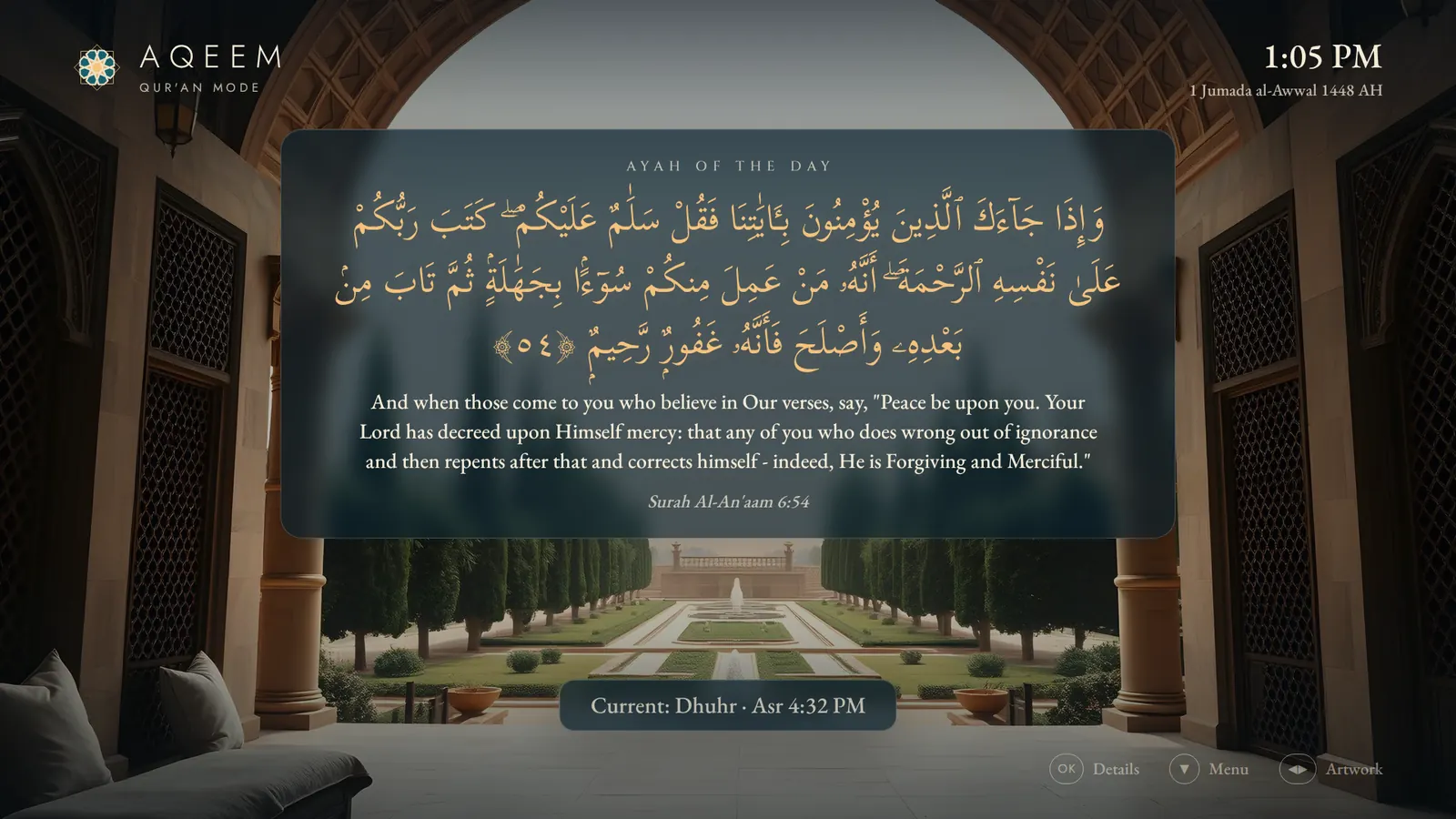
One verse a day in the Uthmani script with the Saheeh International translation. Every verse was reviewed and approved before it was included.
Names of Allah
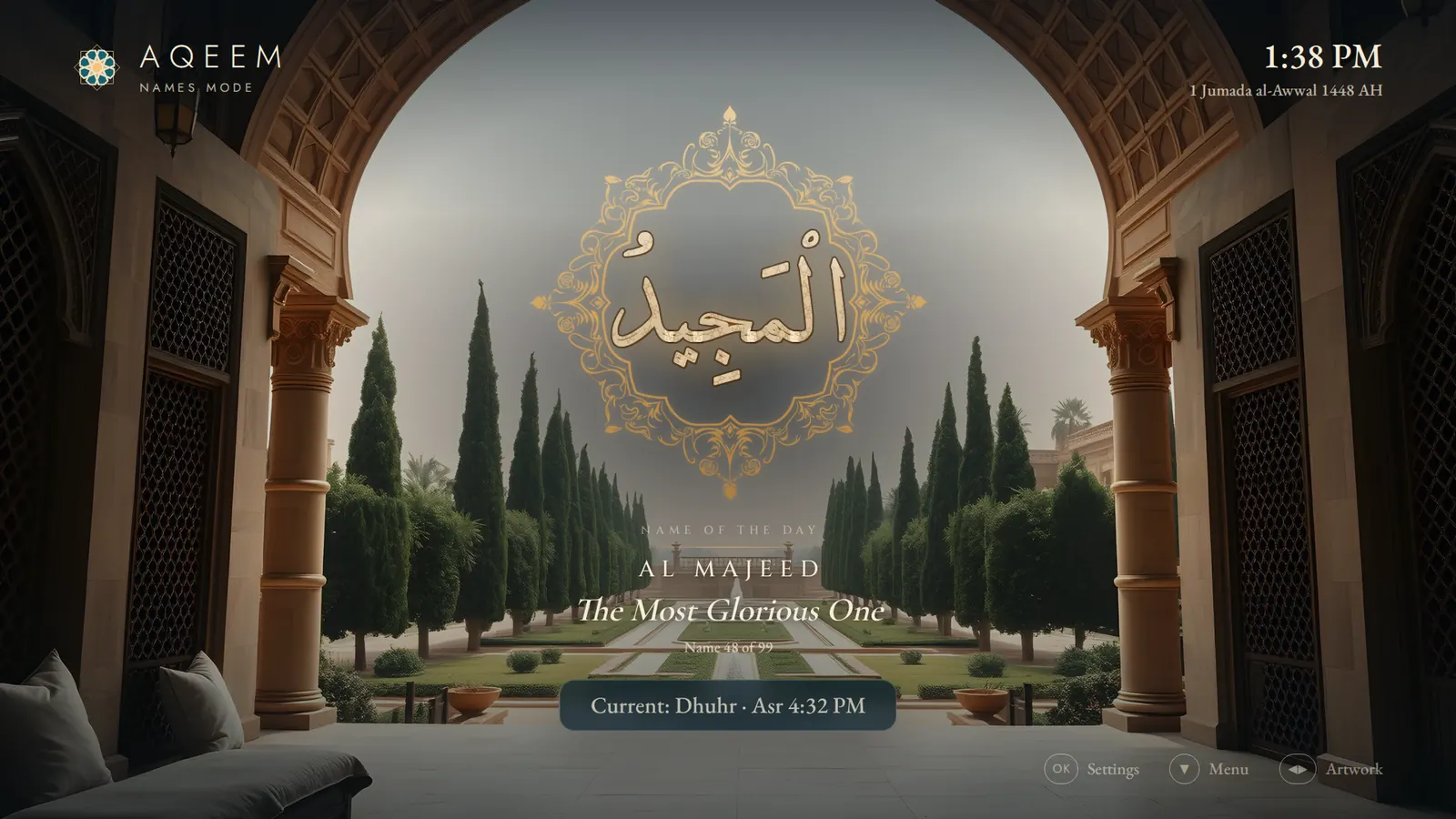
A Name of the Day from the ninety-nine, drawn in calligraphy inside a gilded medallion, with its meaning.
Hijri calendar
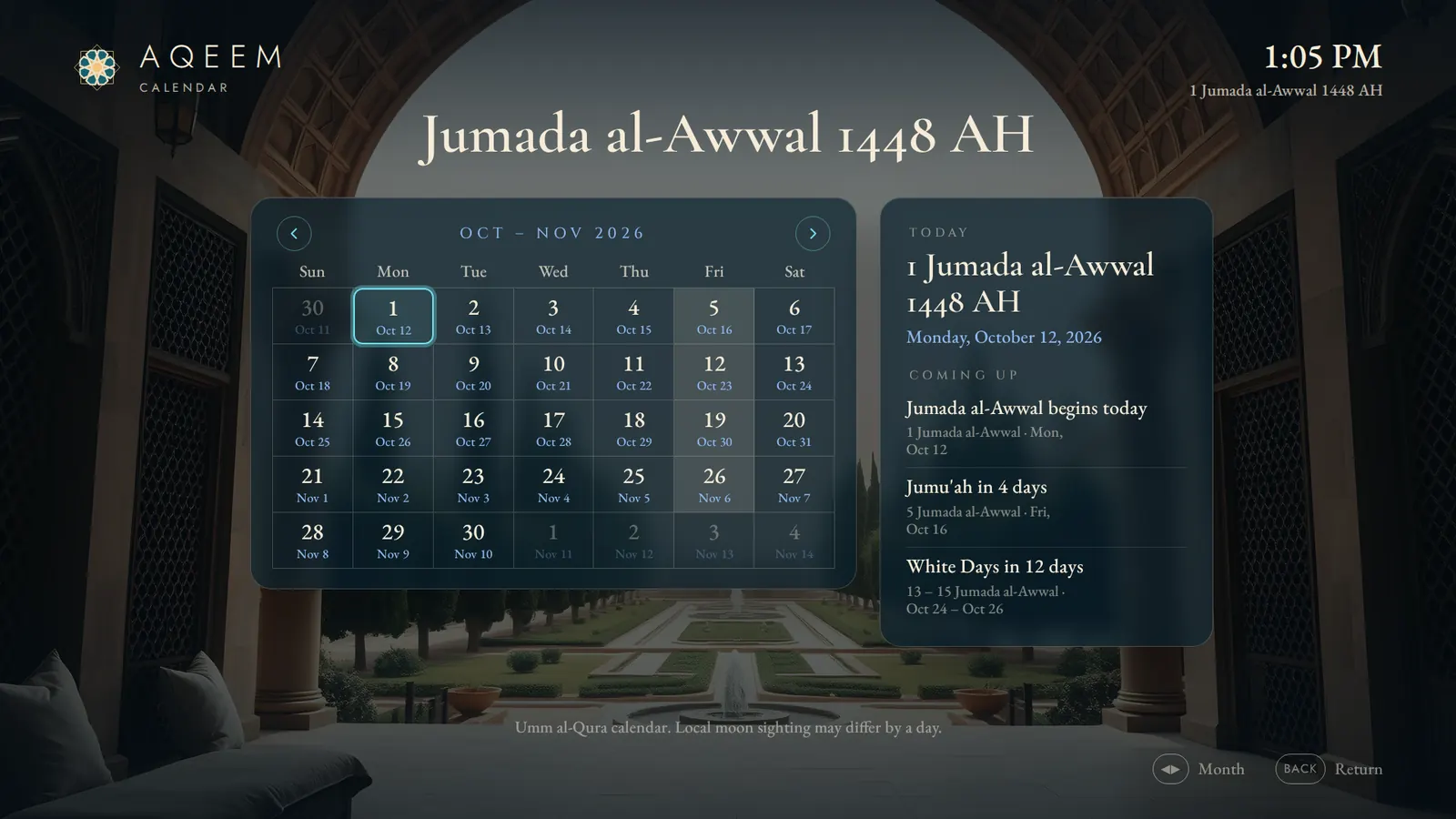
The Umm al-Qura month beside the Gregorian dates, with Jumu'ah, Ramadan and the White Days marked, and a moon-sighting adjustment of up to two days.
Art for the wall
Photographic scenes seen through a carved arched window, chosen for the time of day, plus Islamic geometry and calligraphy. Gentle on screens left on for hours.
On the screen
Calm, readable from the sofa
These are the app's own screens on a TV.
Platforms
Starting with the TV
Aqeem is built on one shared prayer engine, so every device shows the same times. Each device gets an app made for it.
Samsung Smart TV
Running on Samsung TVs today. Coming soon to the Samsung TV app store.
Android TV, Google TV, Fire TV
The same TV experience, driven by your remote.
iPhone, Android, tablets
An app made for touch: prayer times for where you are, the Qibla direction, and adhan notifications.
More TVs and watches
Other TV brands, and a glanceable next prayer on your wrist.
Our promise
Made with care, and nothing else
Questions
Good to know
How are the prayer times calculated?
On the device, from your city's coordinates, using the method common in your country (you can change it) and your Asr school. Nothing is downloaded. More on calculation.
Does Aqeem need an internet connection?
No. The TV app works fully offline: the prayer engine, the city list, the verses, the art and the adhan recordings are all inside the app.
What does Aqeem know about me?
Only the settings you choose, such as your city, kept on your TV. There's no account and nothing is sent to us. Read the privacy policy.
When can I install it?
Aqeem is being tested on Samsung TVs now and will come to the Samsung TV app store first. Android TV, phones and tablets follow.

Say salam
We'd love to hear from you
Questions, ideas, a correction to a prayer time or a translation: write to us.